Enneagram Daily Challenges: Type-Specific Solutions for Growth [With Free Test]
Do you ever feel like you are repeating the same mistakes every day? Perhaps you wake up with a long to-do list but end the day feeling like you accomplished nothing. Or maybe you find yourself over-explaining your actions to avoid conflict, only to feel exhausted by evening. These are not just random bad habits; they are often deep-rooted patterns of your personality.
How can you break these cycles and finally reach your full potential?
The journey to self-improvement begins with understanding why we do what we do. The Enneagram is a powerful psychological tool that identifies nine distinct personality types, each with its own set of motivations and hurdles. By taking a free Enneagram test, you can uncover your core type. From there, you can begin to address the specific challenges that hold you back in your career, relationships, and personal life.
In this guide, we will explore how your Enneagram type influences your daily struggles and provide practical, type-specific solutions to help you grow.
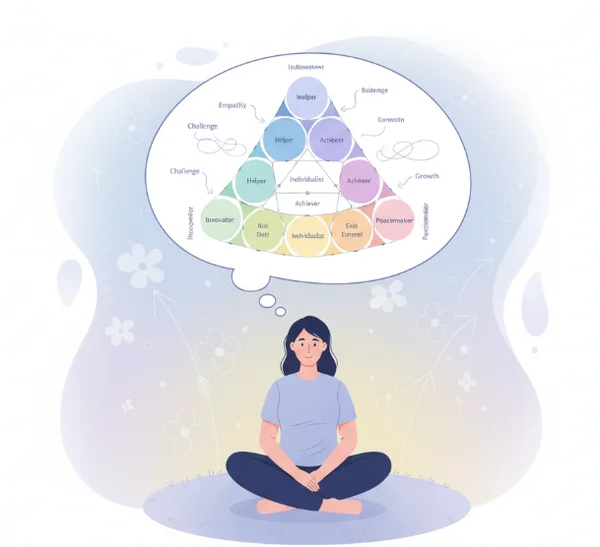
How Core Patterns Influence Daily Life
Every person has a unique lens through which they view the world. This lens is shaped by our core fears and desires. While these motivations help us survive, they can also create Enneagram daily challenges that make us feel "stuck." Understanding these patterns is the first step toward reclaiming your time and energy.
How Core Fears and Desires Manifest in Daily Situations
Your Enneagram type is defined by what you are running toward (desire) and what you are running away from (fear). In daily life, these aren't always dramatic. They show up in small, subtle ways. For example, a person who fears being incompetent might spend three hours researching a simple purchase instead of just making a decision.
These autopilot reactions kick in when fear takes over. Without awareness, we can’t choose better paths forward. By identifying these triggers through an accurate Enneagram test, you can start to see these moments for what they are: defensive reactions rather than necessary actions.
Recognizing Your Type's Recurring Life Patterns
Have you noticed that you tend to have the same argument with your partner or the same frustration with your boss? These are recurring life patterns. To recognize them, you must practice self-observation.
Try to notice when you feel a "pinch"—a moment of sudden irritation, anxiety, or shame. Ask yourself: "What was I trying to protect in that moment?" Most of the time, you will find that your reaction aligns perfectly with your Enneagram type's core struggle. Recognizing these patterns allows you to pause before you react, giving you the space to choose growth over habit.
Type-Specific Daily Challenges and Practical Solutions
Each of the nine types faces a unique set of obstacles. Here is a breakdown of the type-specific problem solving strategies you can use to navigate your daily life more effectively.
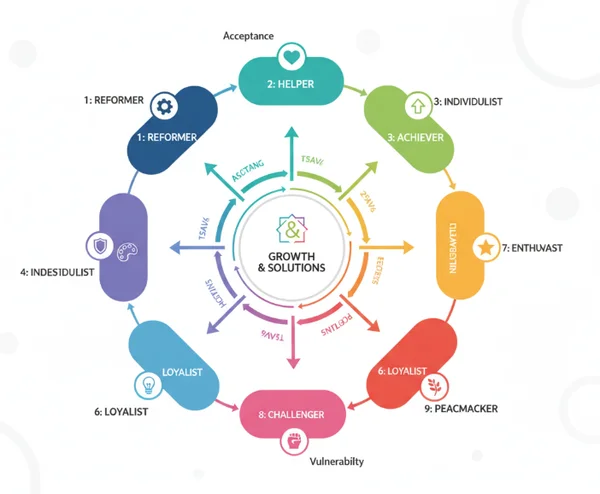
The Perfectionist's Guide (Type 1): Finding Freedom from Inner Criticism
Type 1s crave perfection. Their daily battle? A relentless inner critic that magnifies flaws—in themselves and others. This leads to high stress and a feeling that "if I don't do it, it won't be done right."
The Solution: Practice "intentional imperfection." Choose one small task each day—like making the bed or writing an email—and intentionally do it at 80% effort. Realize that the world does not end when things aren't perfect. This builds resilience against the inner critic and creates room for joy.
The Helper's Journey (Type 2): Setting Boundaries Without Guilt
Type 2s want to be loved and needed. Their daily struggle is saying "yes" to everyone else while ignoring their own needs. This often leads to secret resentment when others don't return the favor.
The Solution: Implement a "pause" rule. Before saying yes to a request, wait five minutes. Ask yourself: "Am I doing this because I want to, or because I'm afraid they won't like me if I say no?" Learning to set boundaries is the ultimate act of self-care for a Type 2. You can learn more about your interaction styles by taking our free Enneagram test.
The Achiever's Path (Type 3): Balancing Success with Authenticity
Type 3s are the "doers" of the Enneagram. Their challenge is equating their worth with their achievements. On a daily basis, this looks like burnout and a feeling of "performing" even when they are alone.
The Solution: Schedule "non-productive" time. Spend 30 minutes a day doing something that has no measurable outcome—like walking in nature or doodling. Focus on the experience rather than the result. This helps you reconnect with who you are outside of your resume.
The Individualist's Exploration (Type 4): Transforming Intensity into Inspiration
Type 4s are sensitive and creative. Their daily challenge is a "moodiness" that can make them feel disconnected from the "mundane" world. They often wait to "feel like it" before they start working.
The Solution: Create a "grounding" routine. When you feel overwhelmed by your emotions, engage your five senses. Drink a cold glass of water or listen to rhythmic music. Structure is actually a friend to the Type 4; it provides a container for your creativity to flow without drowning you in intensity.
The Investigator's Strategy (Type 5): Moving from Observation to Engagement
Type 5s value knowledge and privacy. Their daily challenge is "minimizing." They might skip social events to save energy or spend all day reading about a topic instead of actually doing it.
The Solution: Follow the "5-minute interaction" rule. Make an effort to have one brief, unplanned conversation each day. This prevents you from withdrawing too far into your mind. Since many Fives also benefit from understanding their Enneagram Wings Explained, learning about your secondary influences can help you bridge the gap between thought and action.
The Loyalist's Security Plan (Type 6): Building Confidence Through Small Wins
Type 6s are the ultimate troubleshooters. Their daily challenge is "worst-case scenario" thinking. This constant anxiety can lead to indecision or a constant need for reassurance from others.
The Solution: Keep a "Success Journal." At the end of each day, write down three things that went well because of your skills. When you feel anxious, look at this list. It reminds you that you are capable of handling whatever happens. For more insights into your wings and security points, start your test today.
The Enthusiast's Routine (Type 7): Finding Focus in a World of Options
Type 7s love variety and excitement. Their daily challenge is "FOMO" (Fear Of Missing Out). They often start five new projects but finish none, fleeing from boredom or discomfort.
The Solution: The "Finish One" rule. Choose one task that you find boring and commit to finishing it before you start anything "fun." This trains your brain to handle the discomfort of the mundane, leading to deeper satisfaction in the long run.
The Challenger's Approach (Type 8): Channeling Power Constructively
Type 8s are strong and protective. Their daily challenge is a "too much" energy that can come across as aggressive or intimidating to others. They often feel they have to carry the world on their shoulders.
The Solution: Practice vulnerability. Once a day, share a small struggle or a "soft" emotion with someone you trust. Realize that true strength includes the ability to rely on others. This softens your edges and improves your daily relationships.
The Peacemaker's Method (Type 9): Overcoming Procrastination and Finding Your Voice
Type 9s want harmony. Their daily challenge is "sloth"—not necessarily physical laziness, but a tendency to "tune out" their own priorities to avoid conflict or effort.
The Solution: Use a "Top 3" list. Every morning, identify the three most important things for you, not for everyone else. Do the hardest one first. This prevents you from merging with others' agendas and helps you find your own voice.
Creating Your Daily Enneagram Growth Routine
Personal growth is a series of small, daily choices. To make these Enneagram growth activities stick, you need a routine that aligns with your specific needs.
Morning Rituals That Align With Your Type's Needs
How you start your day sets the tone for your Enneagram patterns.
- Type 1s and 6s might benefit from meditation to quiet the mind.
- Type 3s and 7s might need a moment of stillness before jumping into "doing."
- Type 5s and 9s might need a physical activity, like stretching, to get into their bodies.
A simple 10-minute ritual can help you set your intention to stay present rather than falling into your type's autopilot mode.
Type-Specific Reflection Prompts for Evening Review
Reviewing your day is essential for long-term change. Ask yourself these questions before bed:
- Type 2: Did I give from a place of abundance or a need for approval?
- Type 4: What was a beautiful moment I experienced today that wasn't tied to my mood?
- Type 8: Did I empower someone today, or did I just take control?
If you want a deeper look at your daily habits, consider getting an AI-driven personalized report after you complete the test. It provides specific action plans tailored to your life.
From Daily Struggles to Sustainable Growth
Imagine finally having a roadmap for your mind. With your Enneagram type decoded, you can turn daily challenges into stepping stones. While every type faces struggles—from the perfectionism of the Type 1 to the avoidance of the Type 9—these hurdles are actually opportunities. Each time you recognize a pattern and choose a different response, you move toward a more authentic version of yourself.
Break free from frustration today—your journey toward sustainable growth begins the moment you choose to act. You have the power to unlock your potential and build a life of purpose.
Ready to see yourself clearly? Take the free Enneagram test now and discover the type-specific solutions you need to thrive every single day.
The Takeaway
How can I identify my Enneagram type's daily patterns?
The best way to identify your patterns is through consistent self-observation and taking a reliable Enneagram test. Once you know your core type, look for "automatic" reactions—like getting defensive, withdrawing, or over-working—especially during times of stress. These are your type's signature patterns.
Can these solutions work if I haven't officially taken an Enneagram test?
Not sure about your type? Guessing often leads to misidentification. For accurate results, try our trusted free Enneagram test instead—it pinpoints motivations, not just behaviors. This ensures you apply the right solutions to your specific challenges.
How long does it typically take to see results from implementing these strategies?
Self-awareness often brings immediate relief as you stop judging yourself for your patterns. However, changing long-term habits usually takes 3 to 6 weeks of consistent practice. Small, daily wins are more effective than trying to change everything at once.
Can I apply solutions from multiple types if I relate to several?
Yes! While you have one core type, you also have "wings" and "integration points." It is common to see yourself in other types. However, focus on your core type first, as that is where your primary blind spots live. You can explore your full profile with our personalized AI report.